

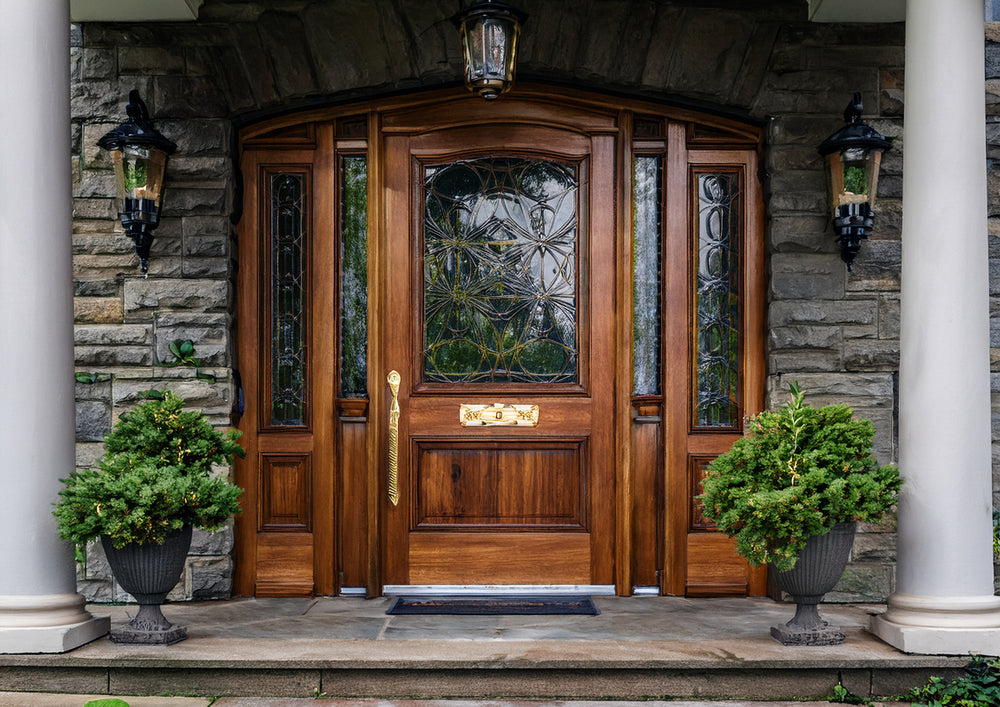
Meranti Doors and Home Security in South Africa: What Really Matters

Home security is an undeniably significant aspect of living in South Africa. The reality is that many households plan for self-protection and prevention because crime response is not always as rapid as one hopes. That’s why it’s worth treating any weakness at an entry point with more gravitas than one would treat a minor inconvenience. A door that does not latch cleanly or a lock that does not fully engage can quickly turn a “secure enough” setup into a vulnerability.
For exterior doors, security is best understood through three main ideas:
-
Delay: how long it takes to force the door open.
-
Deterrence: how likely the setup is to discourage an attempt in the first place.
-
Reliability: how consistently the door locks and holds alignment over time.
A door is only one layer in your broader home security setup. A well-built door benefits from being supported by other measures such as secondary barriers, detection, and response. When the door is solid, it becomes a strong base layer that can integrate well with the rest of your security strategy. Many homeowners start with the door itself, whether they’re looking at meranti doors, aluminium, or steel.
Why Do Meranti Doors Suit Security-Conscious Homes?
Meranti is a trade name used for a group of hardwoods, most commonly from the Shorea genus, sourced across South East Asia. You’ll also see it sold under names like lauan or “Philippine mahogany”, which is where a lot of confusion starts. It is not a true mahogany, and the “Philippine” label is more legacy marketing than a reliable indicator of species or origin.
In practical terms, meranti tends to be popular for exterior timber doors because it offers a workable mix of strength, consistent machining, and a finish that takes stain or paint well.
From a security point of view, the main value of meranti doors is how the timber’s typical characteristics support stability and upkeep. Timber movement is what usually creates the day-to-day issues that turn into security issues: twisting, swelling, dropping, and gradually shifting clearances. When that happens, gaps can open up, the latch starts catching, and the lock may not throw smoothly.
Meranti is often chosen because it is used widely in joinery where dimensional steadiness and serviceability matter. Many meranti types are described as having relatively small moisture movement compared with more temperamental timbers, which supports better long-term alignment when the door is properly sealed and maintained. It is also commonly refinished and restored as it ages, which helps keep the door functioning as a reliable barrier instead of degrading into the weak link at an opening.
How Do Meranti Doors Compare to Other Common Exterior Door Options?
When choosing an exterior door, it helps to understand how meranti compares with other commonly used materials in South Africa. Here’s how meranti doors stack up against the rest:
Meranti Doors vs Budget Timber Doors
Budget timber doors can work, but performance varies widely depending on timber type, construction quality, and finishing. Meranti is often chosen when you want a hardwood door that holds its shape better and finishes more cleanly, which supports consistent latch and lock engagement. The practical benefit is fewer “small problems” that turn into security problems, like sticking, movement, or loosening around hardware over time.
Meranti Doors vs Steel Security Doors
Steel doors are often selected for their strength and deterrence, especially when paired with security features. In real-world use, steel can offer strong resistance at the leaf, but overall performance still depends on the frame, fixings, and lock setup.
Where meranti doors often win is in finish and flexibility of design. Timber allows for far more variety in profiles, panel layouts, and detailing, so you can get a door that looks considered and truly suits the style of the home without defaulting to a purely utilitarian look. That matters for many homeowners because the front door is highly visible, and security upgrades do not always need to come at the cost of aesthetics.
Meranti also tends to have an edge in serviceability and repair. A timber door can be refurbished and resealed as it ages, which helps maintain long-term reliability if it’s properly cared for.
Meranti Doors vs Aluminium Doors
Aluminium doors are popular for their low-maintenance appeal and weather resistance. They can work well for exterior use, and security again depends on frame integrity, hardware, and installation quality.
Meranti tends to appeal when you want a traditional timber look and feel, plus the ability to refinish or restore the door rather than replacing it when it shows wear. When assessing an opening properly, it helps to start with the frame itself. Take a look at our range of door frames here.
What Actually Makes an Exterior Door Secure?
The security of an exterior door is determined by the combined performance of the door leaf, the frame, the hardware, and the way everything works together. The weakest of these can become your security system’s most likely point of failure. If you’re matching finishes and formats across openings, our range of door handles is a useful reference point.
Door Construction
A door can feel solid and still be vulnerable at the areas that take force during an attack. The hinge side and the lock side are the two most significant stress zones. Doors that are built to handle exterior use typically have stronger structure where hinges and locks are fitted, so fixings stay tight and the door does not start “working loose” with daily opening and closing.
Meranti doors machine cleanly and hold fasteners well, which supports stronger fixing at hinges and locks. The timber itself is only part of the outcome, though. The door still needs solid construction in these zones, along with hardware that suits the door’s weight and use. For lock selection, you can browse our range of door locks here.
Frame Strength & Anchoring
A strong door in a weak frame is a common failure point. If the frame is able to flex under pressure, it will reduce how well the lock keeps the door seated. Make sure to select a frame that stays rigid and ensure that it is fixed securely into the structure of the opening. When the frame moves, security hardware can’t perform as intended.
Hinges & Fixings
Hinges are not just a weight-bearing detail. They affect alignment, closing behaviour, and hinge-side vulnerability. Quality hinges, correct spacing, and fixings that properly bite into the supporting material all contribute to a door that stays true and resists being forced at the hinge edge. If hinges loosen over time, the door will start dropping, which could compromise lock engagement.
Locks, Strike Plates, & Lock Engagement
Locks can only do their job when they engage cleanly and consistently. Strike plates and keeps need to be robust and securely fixed so that they do not shift or deform under repeated use. If you have to lift, slam, or pull the door to get the lock to throw, your system is already drifting into unreliable territory. Reliability is a security issue because it changes behaviour. For example, people are more likely to stop locking properly when the mechanism becomes frustrating to operate.
Gaps, Alignment, & Seasonal Movement
Small gaps can make prying the door open by force that much easier. Misalignment can affect how well locking points engage, especially on doors that see a lot of sun and harsh weather exposure. With timber, seasonal movement is normal, but it should be manageable through proper finishing and upkeep.
Layering With Additional Security Measures
Even a well-built door should not carry the full weight of your home security plan. A meranti door can be a strong base barrier at the main entrance, but good security depends on how consistently you cover the rest of the exterior openings too.
A practical way to think about layering is to start by securing the different opening types, then add detection and response around them:
-
Primary door barrier (hinged door): the door leaf, frame, hinges, locks, and reliable lock engagement
-
Other exterior openings: windows and sliding or patio-style openings, where glazing often changes the risk profile. Our Strongwood range is designed for openings that aim to combine a timber look with built-in reinforcement.
-
Perimeter and secondary barriers: security gates, burglar bars, and perimeter measures
-
Detection: alarms, beams, cameras, and motion lighting
-
Response: private security/armed response and practical household routines that support a quick reaction
Smart tech can also sit within detection and response, but the core principle stays the same. Start by making the openings reliable and hard to force, then support it with layers that add visibility and consequence.
Choosing Meranti Doors as Part of a Layered Security Setup
A meranti door can be a strong foundation for an exterior opening, especially when it stays aligned, seals properly, and supports reliable lock engagement. That reliability is what keeps the door doing its job day after day, year after year.
If you’re choosing meranti doors, prioritise the fundamentals that hold up over time. From there, match the door to the rest of your security setup so that every layer supports the next.